
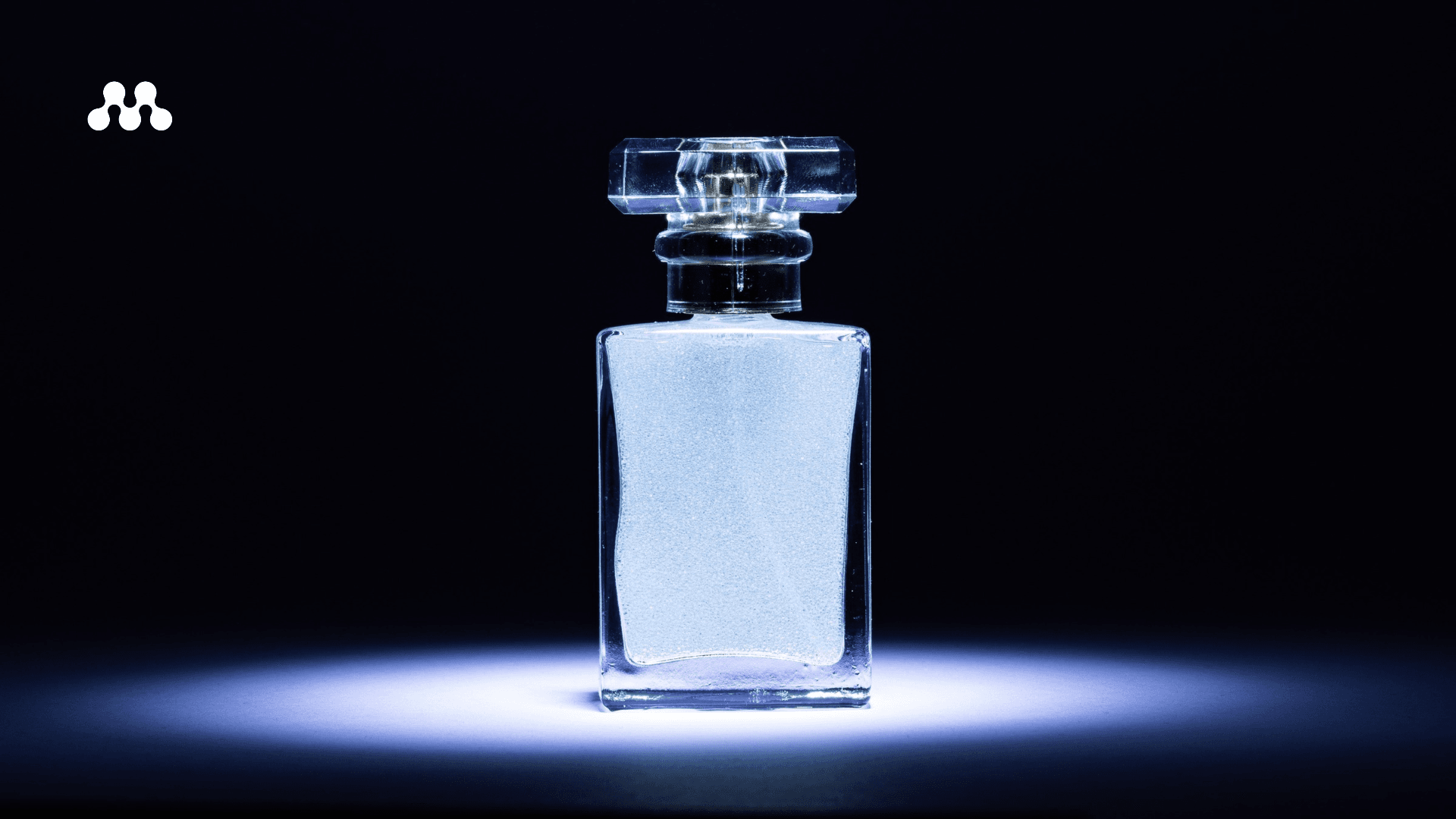
Fragrance encapsulation sounds simple: put an ingredient in a tiny capsule and you’re done. In practice, it’s one of the most demanding disciplines in formulation science, especially for water-based, alcohol-free perfume. Here, we separate the myths from the reality.
Myth 1: Fragrance encapsulation is just putting an ingredient in a capsule
Reality: it’s a system, not a shell.
Enclosing an ingredient is the easy part to picture and the smallest part of the job. We have to consider the properties of the core material, the structure of the capsule and how the capsules behave in the final formulation. Just as important is how the ingredient interacts with the encapsulation process itself, which is often one of the most challenging parts.
All of these elements need to work together to achieve the desired product characteristics and performance. The real challenge is building a system where the encapsulated ingredient, the process and the surrounding formulation are all compatible.
Myth 2: Water-based fragrance is easy to develop
Reality: alcohol-free perfume creates a different set of formulation challenges.
Fragrance oils are complex blends of many raw materials with different polarities. Alcohol normally acts as the solvent that keeps them evenly dissolved. Without it, the fragrance itself can affect stability, appearance and preservation, so every raw material has to be considered.
Formulating without alcohol requires an approach specifically adapted to the system. pH, preservation, ingredient compatibility, viscosity and suspension, and packaging compatibility all have to be balanced at the same time, and each one influences the others.
Myth 3: Fragrance capsules can simply be added to an existing base formulation
Reality: the finished product is what counts.
A capsule that performs well on its own doesn’t automatically perform well in a formula. We incorporate the capsules into the final formulation and evaluate how the complete system behaves, looking at stability, sensory properties, preservation and packaging compatibility.
A successful encapsulation technology has to translate into a well-performing finished product, and that takes close collaboration between formulation, R&D and quality.
Myth 4: More fragrance always means better fragrance performance
Reality: balance beats load.
Fragrance concentration is only one factor in the final olfactory experience. The composition, its compatibility with the encapsulation system and its behavior in the finished formulation all shape what the consumer actually smells.
The goal isn’t to maximize the fragrance load. It’s to find the right balance between fragrance characteristics, formulation requirements and the desired consumer experience.
Why this matters for alcohol-free fragrance
Great products aren’t added together, they’re engineered. Encapsulation, formulation and fragrance only work when they’re developed as one system, with formulation, R&D and quality at the same table.
That’s the thinking behind PerfumePearls™, our patented, water-based fragrance encapsulation technology.
Want to learn more or request samples? Get in touch.
